
I once watched a seller pull one search for hotels in a big city, export the file, and call it a market list. The file held a slice of the city, mostly large hotels near the centre, and nobody could say which hotels were missing. The list was not wrong. It was incomplete.
Short answer: a google maps scraper for hotels builds a usable list when you run one search per hotel category in one postal code area at a time, keep the hotel-only fields, drop duplicate rows across searches, and check the coverage before you call anyone. One broad search will not cover a city.
What does a worked example look like in one city?
I use Dublin for the worked example here, because Browserless uses "Hotels in Dublin, Ireland" as the search in its Puppeteer guide for building a Maps scraper, per Browserless. Dublin is also a city where one broad search fills up fast, so the split method shows its value at once.
I start with three category searches, not one: Hotel, Family Hotel, and Luxury Hotel, the same split Outscraper names in its hotels guide, per Outscraper. Each runs in one postal code area at a time, on its own tab. A hotel that appears in two searches goes on one tab only, and I note the duplicate so I do not call it twice.
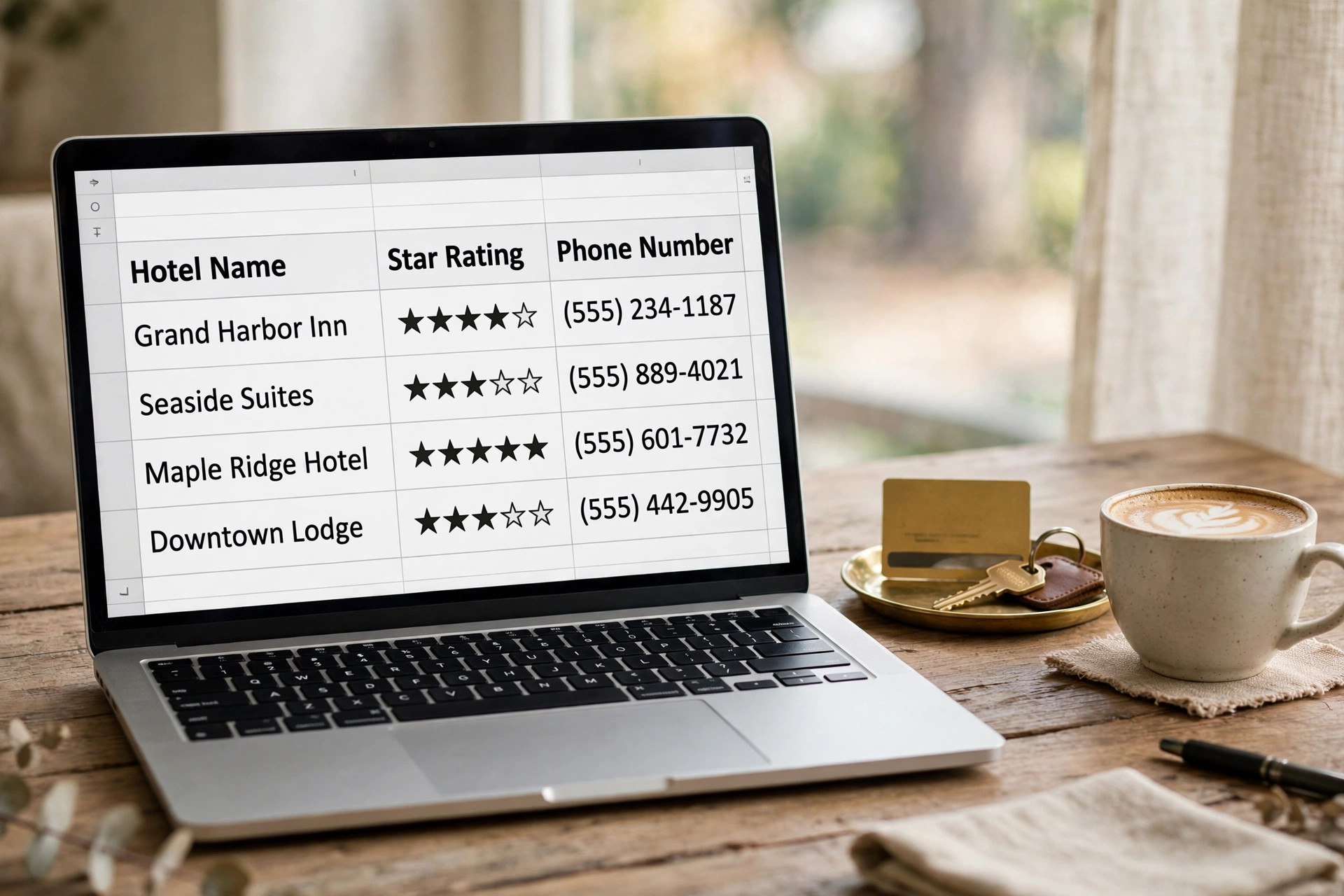
I run the searches in postal code order and record the code beside each tab name, so I can see which areas I have covered. For each row I record the hotel name, category, phone number, rating, review count, website, star class, and booking link where one exists. I add two columns of my own: property type in my own words, and a contact note naming who I spoke with. Those two columns turn a raw export into a calling list.
I set a floor before I start calling, such as a rating of 4.0 or higher and at least twenty reviews. The worked example stays a teaching sample, and no count in this section comes from a live pull.
Which hotel fields should you keep, and which can you drop?
A hotel record can carry dozens of fields, and most of them add nothing to a sales call. I keep the fields that change who I call, what I say, or when I call.
The hotel-only fields come from the AIMultiple benchmark of five Maps scraper APIs, published November 2, 2026, per AIMultiple. Apify returned hotelStars, hotelDescription, hotelAds, checkInDate, and checkOutDate, while SerpApi returned amenities, check_in_time, check_out_time, pricing, and price_details. A scraper that returns none of them gives you a generic business list, not a hotel list.
Star class sorts the list by size and spend. Amenities tell you what the property sells beyond a bed. Check-in and check-out times tell you when the front desk is busy. Booking links show direct versus third party bookings. Price details tell you the rate band, which shapes any offer you make.
| Field | How I use it | What it cannot tell you |
|---|---|---|
| hotelStars / star class | Sort by class to group large hotels apart from guesthouses | How many rooms the property runs |
| Amenities | Match your offer to what the hotel already sells | Whether an amenity is open right now |
| Check-in / check-out times | Call outside the busy desk hours | When the manager is in the building |
| Booking links | See if the hotel books direct or through third parties | How much commission the hotel pays |
| Price details / pricing | Read the rate band before you size an offer | What the hotel would pay for your service |
| Rating and review count | Sort high to low inside each class and call from the top | How a hotel treats a new supplier |
| Phone and website | Confirm the property and find the right contact | Who owns the buying decision |
Fields I drop from the working sheet include photo counts, street view links, and posts, because none of them changes the call. I keep them in the raw export. A sheet with forty columns slows every call. A sheet with twelve columns moves.
How do you cover a whole city when one search caps near 120 results?
A single Maps search tops out near 120 results, an accepted fact from earlier research on this blog. A city with more hotels than that will never fit in one search, and the hotels that drop off are usually the smaller ones outside the centre, with fewer reviews. Those are often the hotels most open to a new supplier.
The fix is the split Outscraper describes in its hotels guide, per Outscraper. You run several category searches in small areas, and you use postal codes to make each search small enough to fit under the cap. Outscraper pairs the categories Hotel, Family Hotel, Luxury Hotel, and others with locations split into small areas such as neighbourhoods and counties.
Outscraper states the same limit from its own side: a search for hotels near New York City returns only about 500 places, per Outscraper, still far short of every hotel in the city. I cite it as Outscraper states it, not as a settled count. Either way, one search cannot cover a city, so you split.
I run the split in a fixed order. First I list the postal codes for the city. Then I run each category in each postal code, one search at a time. Then I merge the tabs and drop duplicates by place ID, because the same hotel will appear in more than one search. Outscraper calls this step Drop duplicates, per Outscraper. I run it before I call anyone, because a duplicate row means a second call to the same hotel.
The setup guide covers the cap in full, so I do not repeat that ground here. Read it before you run your first split.
Which filters actually matter for a hotel list?
Category comes first. Maps categories are messy, and one hotel search can return hostels, apart-hotels, and short stay flats that do not fit your need. I scan the category column and move rows outside the hotel type I searched for into their own tab. Either way, they do not stay mixed in with hotels.
Star class comes next, as a grouping tool, not a quality score. A three star hotel can be a better prospect than a five star hotel, because it may have no booking software at all, while the five star property may already run three systems. I group by class, sort by rating inside each group, and call the strongest hotels in each group.
Rating and review count come as a pair, the same way they do in the real estate post. A 5.0 from three reviews tells you less than a 4.5 from 400 reviews, and a high count can reflect age more than current service. I sort by rating first, read the review count beside it, and call the hotels that look strong on both.
Booking links come last, as a buying signal. A hotel with a direct booking link has invested in its own booking flow. A hotel with no booking link may still be a prospect, but the conversation starts further back, with the gap itself.
Which mistakes turn a hotel list into a pile of duplicates?
Each trap below has a plain fix.
Running one broad search for the whole city is the first trap. One search returns the hotels Maps ranks first, which skews toward large hotels in the centre, and leaves the rest uncounted. Fix it with the category and postal code split, and keep an area log.
Skipping the dedupe step is the second trap, and it is the most expensive. The same hotel appears under Hotel, Family Hotel, and Luxury Hotel, and again in two nearby postal codes. Three rows for one hotel means three calls to the same front desk. Fix it by dropping duplicates on place ID before you call anyone.
Keeping every field on the working sheet is the third trap. A forty column sheet hides the columns that matter. Fix it by keeping twelve columns on the working sheet and leaving the rest in the raw export.
Calling in Maps order is the fourth trap. Maps orders results by relevance and distance, not by call quality. Fix it by grouping by star class and working from the top of each group by rating.
Treating a hotel like any other business is the fifth trap. A hotel has a front desk, a manager, and an owner, and the person who answers rarely owns the buying decision. Fix it by asking for the manager by name on the first call and logging the name.
Ignoring check-in hours is the sixth trap. Calling a hotel at check-in time means calling a desk that is queueing guests. Fix it by calling outside the busy hours, using the check-in and check-out times from the listing.
What compliance basics must hotel outreach respect?
Calling rules differ by country, so check the rules where you call before you start. In the United States, the national do-not-call list and state lists apply to many sales calls, and you should screen your numbers against them. Keep a record of the screen.
Consent matters where the law requires it, and as good practice everywhere else. If a hotel asks you to stop calling, stop. I call during normal business hours only.
Google Maps data is public listing data, and the setup guide covers the terms question in more depth. Keep your outreach to the business contact details shown on the listing or the hotel website.
How does this list fit with the wider Maps workflow?
The hotel method here pairs with the restaurants post, which follows the same industry structure for a different field set: cuisine, menu links, and reservation providers instead of stars and amenities. The split method and the dedupe step are the same in both.
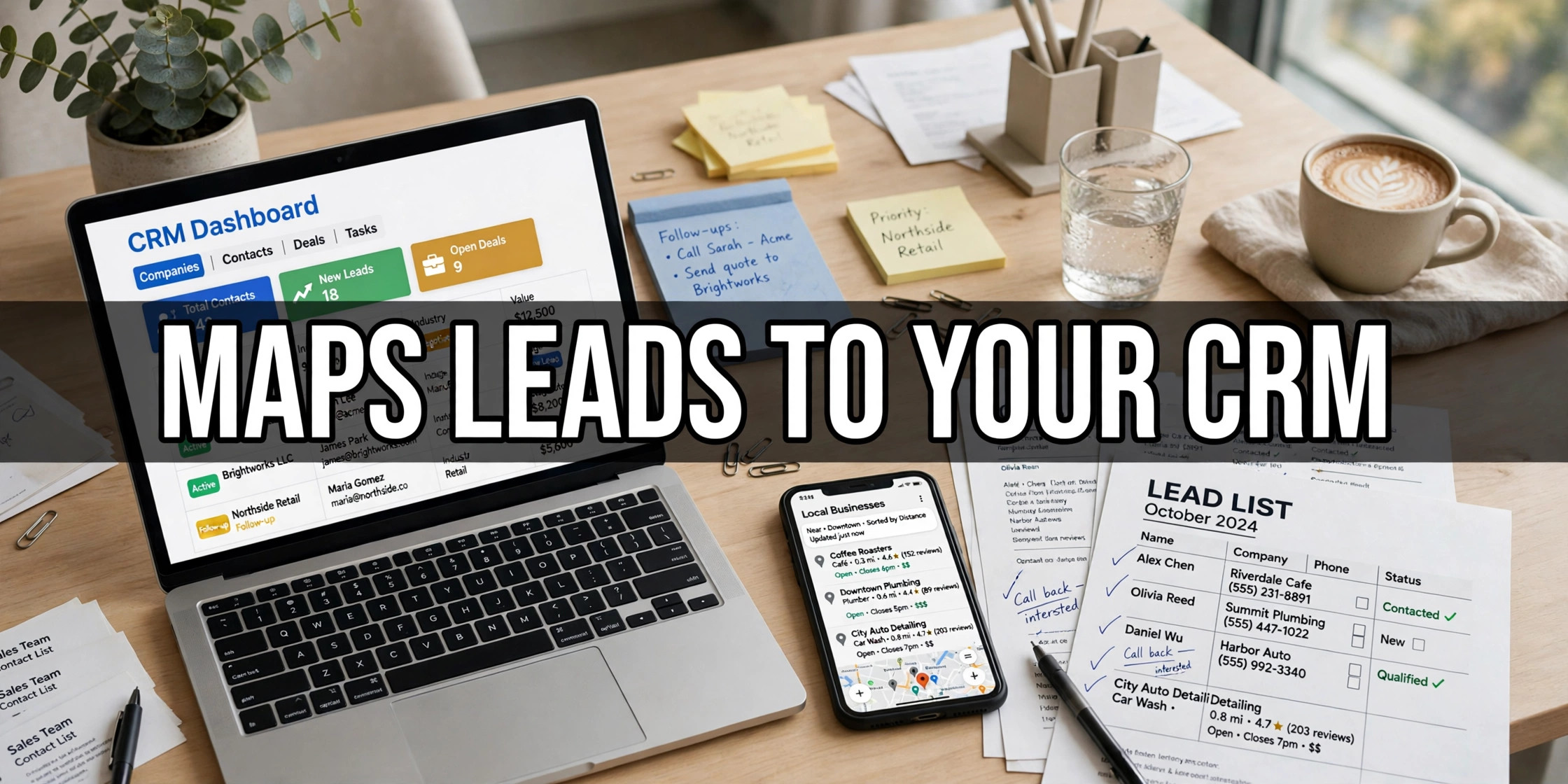
Once the list is built, the lead list guide shows how to take it into a spreadsheet you can sort, filter, and share. The GoLeads Pro extension covers the tool itself, including the vendor-reported free tier of 50 leads a day up to 300 total with no credit card.
Checklist: build your hotel list in one sitting
Work through these steps in order.
- List the postal codes for the city and log each one as you cover it.
- Run one search per hotel category in each postal code, each on its own tab.
- Keep the hotel-only fields on the working sheet.
- Merge the tabs and drop duplicates by place ID before you call anyone.
- Group by star class, sort by rating, and call from the top of each group.
- Screen numbers against do-not-call lists.
- Call outside check-in hours, ask for the manager by name, and log every outcome.
- Export the finished list with notes intact, and re-check numbers before the next round.
Frequently asked questions
Can you scrape hotels from Google Maps?
Yes. A Maps scraper pulls public listing data for hotels: name, address, phone, website, rating, review count, star class, amenities, and booking links, where the listing carries them. Outscraper describes the same job in its hotels guide, per Outscraper, and names the category plus postal code split as the way to cover a city.
What fields does a hotel scraper return?
The AIMultiple benchmark of five Maps scraper APIs, published November 2, 2026, lists hotel-only fields split across two tools, per AIMultiple. Apify returned hotelStars, hotelDescription, hotelAds, checkInDate, and checkOutDate, while SerpApi returned amenities, check_in_time, check_out_time, pricing, and price_details. Most scrapers also return name, address, phone, website, rating, and review count.
Why does one hotel search miss most of a city?
A single Maps search tops out near 120 results, an accepted fact from earlier research on this blog. A city with more hotels than that will never fit in one search. Outscraper notes the same limit, with a New York City search returning only about 500 places, per Outscraper.
How do you split a hotel search by postal code?
List the postal codes for the city, then run one search per category in each postal code. Outscraper names this exact method in its hotels guide, per Outscraper, and says a postal code with a city and country name makes the ideal location. Log each code, merge the tabs, and drop duplicates by place ID.
What is the best category split for hotel searches?
Start with Hotel, Family Hotel, and Luxury Hotel, the split Outscraper names in its hotels guide, per Outscraper. That split catches the three shapes a hotel takes on Maps: the plain hotel, the family run property, and the high end property. Add more categories only when a city shows gaps, and keep each category on its own tab.
Should you call hotels or email them first?
I call first. A hotel has a front desk, a manager, and an owner, and the person who answers rarely owns the buying decision, so a call finds the right name faster than an email to a generic address. Ask for the manager by name and log it. Email works after the call, as a follow up.
How do you avoid calling the same hotel twice?
Drop duplicates by place ID when you merge the tabs, because the same hotel appears under more than one category and in more than one postal code. Outscraper calls this step Drop duplicates, per Outscraper, and it runs inside a single task. When a place ID is missing, match on name plus street address instead, and log the match.
Is it legal to scrape hotel data from Google Maps?
Hotel listings on Maps are public business data, and scraping them is a common practice, but the rules differ by country and by use, so check the rules where you operate before you start. The setup guide on this blog covers the terms question in more depth. Use only the business contact details shown on the listing or the hotel website.
Run the three category searches for your city, split by postal code, drop the duplicates, and call from the top of each star class group. Get the GoLeads Pro extension and start from the search you already ran.